

Proper and regular oral hygiene helps prevent plaque and tartar, which are the main causes of tooth decay and periodontal disease. By maintaining proper oral hygiene, you can prevent the development of dental problems and the need for complex and expensive treatments.
Healthy gums are an important indicator of oral health. If oral hygiene is inadequate, plaque can build up on teeth near the gums, leading to inflammation and bleeding gums. Ignoring these signs can lead to gingivitis and then periodontal disease.
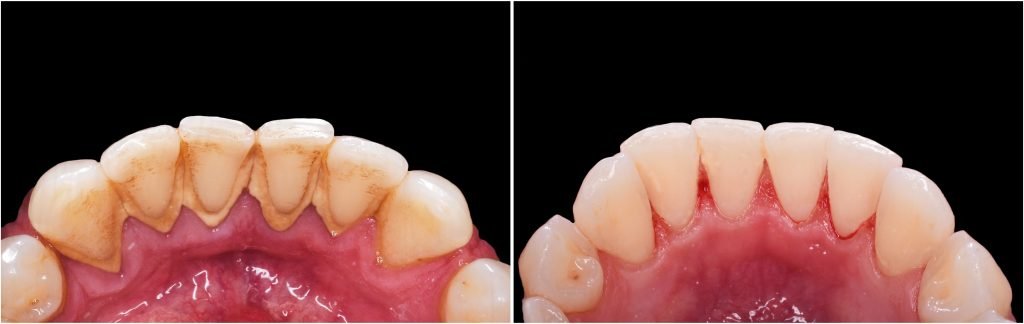
How do we prevent?
- Schedule regular dental visits: don’t neglect regular visits to your dentist for check-ups and professional hygiene.
- Brush correctly and regularly: Brush your teeth at least twice a day for at least two minutes.
- Flossing: Flossing is just as important as brushing your teeth and should be used daily. Use dental floss to clean the interdental spaces, removing food debris and plaque that builds up between the teeth. Be sure to use gentle strokes and not too much pressure to avoid damaging the gums.
- Mouthwashing: Regular use of an antiseptic mouthwash solution can help remove bacteria and food debris, leaving your mouth feeling fresh and protecting against cavities and gum problems. Choose a product recommended by your dentist and rinse your mouth according to the instructions on the package.
- Mouthwash: The use of a special device that sprays water or special solutions into the mouth to clean hard-to-reach areas with a toothbrush and remove food debris and plaque. Mouthwash can be an effective way to complement brushing and maintain better oral hygiene.